

How Virtual Reality Is Transforming the Way We Train the Next Generation of Medicine Makers
As the UK marks International Day of Education, a quiet revolution is taking place at the intersection of education, healthcare, and advanced manufacturing. At its centre is a simple but powerful idea: people learn best by doing — and virtual reality now allows them to do so safely, affordably, and at scale.
That belief underpins Resilience, a £4.3 million, UK government-funded initiative using immersive virtual reality (VR) to tackle one of the most urgent challenges facing the life sciences sector: a growing skills shortage in advanced medicines manufacturing.

The programme is co-directed by Professor Ivan Wall, Professor of Regenerative Medicine at the University of Birmingham. Speaking from the Birmingham campus, Wall is clear about the scale of the challenge.
“The medicines manufacturing industry in the UK has a significant skills shortage,” he explains. “That’s largely because the medicines we make today are far more complex than traditional pharmaceuticals.”
A New Generation of Medicines — and a New Training Problem
Advanced therapies such as cell therapies, gene therapies, and RNA-based vaccines are transforming healthcare, but they require entirely new manufacturing processes.
“The way we make these medicines is very new,” Wall says. “We need ways of training people quickly and effectively so they can support healthcare — and it’s incredibly challenging to do that using traditional approaches.”
Training staff inside real-world pharmaceutical cleanrooms is expensive, highly regulated, and limited by capacity.
“These are GMP cleanrooms that cost a lot of money to run,” he explains. “You simply can’t put people into them in the numbers that we need.”
VR, however, changes that equation. “With virtual reality, we can put people into virtual replicas of these environments without gowning up, without using physical lab space, and without disrupting live production.”
Why the UK Backed Resilience
Recognising the strategic importance of advanced medicines manufacturing, the UK government launched a tender to create a Medicines Manufacturing Skills Centre of Excellence. Resilience was the successful bid.
“The government realised a few years ago that this problem needed addressing,” Wall says. “Resilience was set up to train people in large numbers, using digital tools that are consistent and standardised.”
That consistency is critical in regulated industries. “When training is digital, it doesn’t change depending on geography,” he explains. “Someone trained in London receives exactly the same experience as someone trained in Edinburgh.”
Training That Starts Before the Job Begins
One of Resilience’s most powerful advantages is its ability to bridge the gap between education and employment.
“We can give people this experience while they’re still studying,” Wall says. “So when they enter the workplace, they already understand the equipment, the processes, and the environment.”
The result is faster onboarding, fewer errors, and lower costs. “It reduces failure rates associated with poorly trained people doing things incorrectly in physical environments.”
Opening Doors — and Rethinking Who Gets In
Beyond efficiency, VR is also reshaping who gets access to careers in science and medicine.
“A lot of education still favours people who can sit through PowerPoint presentations and pass written exams,” Wall observes. “That’s not the best way of identifying talent.”
He believes VR can help remove what he calls an “invisible barrier” to entry.
“Think about skilled tradespeople — plumbers, carpenters, mechanics,” he says. “They’re incredibly capable, but they may not have gone to university because they weren’t considered ‘academic’. VR allows us to train people through different modalities.”
This approach aligns with research on multiple intelligences and experiential learning, allowing individuals to engage through sight, sound, movement, and interaction rather than text alone.
“It’s about equity of access,” Wall says. “We can encourage and inspire people who wouldn’t normally consider careers in pharmaceuticals.”
Starting Early: From Primary School to STEM Careers
Perhaps most striking is Resilience’s work with primary school children. “This isn’t about training them,” Wall is quick to clarify. “It’s about exposure.”
Children may understand what doctors and nurses do, but few know how medicines are made. “We’ve worked with thousands of youngsters in the last 18 months,” he says. “We put a headset on them and show them how medicines are manufactured — careers they’d never otherwise encounter.”
The aim is long-term. “We want to build a funnel,” Wall explains. “From early exposure, to STEM education, to advanced training, and ultimately into the workplace.”
Confidence Before Competence
Across education, care, and healthcare, Wall repeatedly returns to one theme: confidence. “A lot of training is about familiarity — knowing where you are, what happens next, and how things work.”
VR allows learners to rehearse safely. “By the time they enter a real lab, they already have a level of understanding that helps them perform better.”
The evidence is compelling. “We worked with apprentices and found that those who used VR scored 140% higher in competency assessments compared to those who just read protocols.”
Learning Faster — and Remembering More
VR doesn’t just improve outcomes; it accelerates learning.
“It’s more immersive, more enjoyable, and more memorable,” Wall says. “People remember the VR sessions. Traditional lectures tend to blur together.”
That has direct implications for cost, retention, and workforce readiness.
Assessment, Integrity, and the Future of Education
VR also solves a growing challenge in education: how to assess real competence.
“With VR, we can capture spatial and movement data,” Wall explains. “We know it’s the learner doing the task, and we can assess actual competence — not just recall.”
He sees this as transformative. “We’ve never really been able to do that before in academia.”
From Campus to Consumer?
Resilience’s technology is developed with industry partner 4Plus Immersive, and Wall believes wider access is inevitable.
“This is software,” he says. “There’s already a small demo on the Meta app store that’s been downloaded about 4,000 times.”
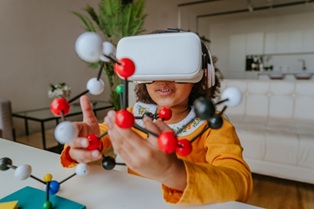 Looking ahead: “Yes — absolutely — I can see this becoming something parents could use to expose children to STEM careers, just like chemistry sets or microscopes once did.”
A Necessary Shift
As the interview concludes, Wall reflects on the bigger picture.
“In 2026, we can’t keep doing business as usual,” he says. “These tools help solve problems around cost, sustainability, environmental impact, diversity, and accessibility.”
For education providers, care organisations, and pharmaceutical manufacturers alike, the message is clear: immersive learning is no longer optional — it’s foundational.