

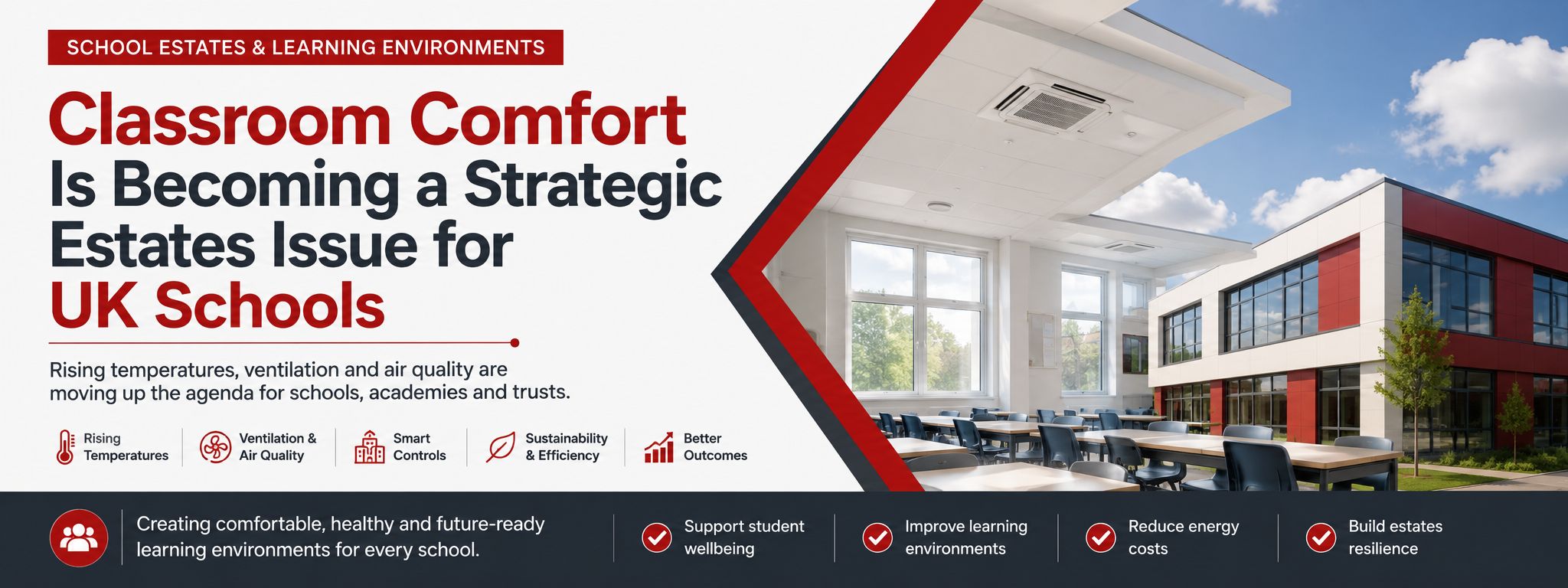
School Estates & Learning Environments
Classroom Comfort Is Becoming a Strategic Estates Issue for UK Schools
Why rising temperatures, ventilation and learning environments are moving up the agenda for schools, academies and trusts.
What was once considered an occasional summer inconvenience is increasingly being viewed as a wider estates, wellbeing and learning-environment challenge.
- How comfortable are learning environments during periods of extreme heat?
- How does overheating affect concentration, productivity and staff wellbeing?
- What practical options exist to improve classroom conditions?
- How can schools balance comfort, energy efficiency and sustainability objectives?
- What role should cooling, ventilation and air quality technologies play in future estates planning?
The Challenge Is Not the Same for Every School
One of the key themes emerging from the discussion is that there is no single solution. Many school buildings were designed for a different climate and a different set of operational requirements. Older buildings, temporary classrooms, ageing estates and constrained budgets can make large-scale environmental improvements challenging. At the same time, many schools are already working to improve energy efficiency, reduce carbon emissions and modernise their estates. This means that every school faces a unique set of circumstances. Some may experience occasional overheating during short periods of hot weather. Others may face recurring challenges affecting classrooms, IT suites, staff areas, libraries, assembly halls and specialist learning environments. The question is no longer simply whether temperatures are rising. The question is how schools can create learning environments that remain comfortable, productive and sustainable over the long term.Why Classroom Comfort Matters
Research consistently highlights the importance of the physical learning environment in supporting educational outcomes. When classrooms become excessively warm, both staff and students can find it more difficult to concentrate, remain comfortable and maintain productivity throughout the school day. School leaders are increasingly recognising that classroom environments form part of a much broader conversation that includes:Student wellbeing
Staff wellbeing and retention
Attendance and engagement
Learning outcomes
Indoor air quality
Sustainability targets
Estate resilience
Long-term operational costs
What The Public Discussion Is Telling Us
One of the most interesting aspects of the recent debate is how the conversation has evolved. Historically, discussions around cooling classrooms often focused on whether air conditioning was necessary in UK schools. Today, the discussion is much broader. Schools, estates professionals and industry specialists are increasingly exploring how buildings can be adapted to create healthier, more comfortable learning environments while still supporting sustainability and budget objectives. The conversation now includes:- Mechanical ventilation systems
- Air conditioning technologies
- Heat pumps with cooling capability
- Indoor air quality solutions
- Smart building controls
- Solar-powered energy strategies
- Building fabric improvements
- Solar shading and solar-control measures
- Energy-efficient cooling technologies
Looking Beyond Air Conditioning
Although much of the public discussion focuses on air conditioning, many schools are taking a broader approach to environmental management. Modern estates strategies increasingly consider how heating, cooling, ventilation and energy systems can work together. For example, schools investing in renewable technologies may also explore how solar generation, battery storage, heat pumps and building controls can support wider environmental objectives while improving comfort throughout the year. Similarly, improvements to insulation, glazing, shading and ventilation can often form part of a wider estates improvement programme. The result is a growing focus on creating resilient educational environments that can adapt to future demands while supporting both learning and sustainability goals.Questions School Leaders May Wish to Consider
As part of wider estates planning, schools may wish to assess:- Which buildings experience the highest temperatures during warmer periods?
- Are staff or students regularly reporting discomfort?
- How effective are current ventilation arrangements?
- Is indoor air quality being monitored?
- Could building controls improve environmental performance?
- Are there opportunities to integrate cooling with wider sustainability initiatives?
- What funding opportunities may be available?
- How resilient is the estate to future climate conditions?
A Growing Opportunity for School Estates Planning
As school estates continue to evolve, classroom comfort is increasingly becoming part of strategic decision-making. Alongside energy efficiency, carbon reduction and long-term budget management, schools are beginning to examine how their buildings support the people who use them every day. Whether through improved ventilation, cooling technologies, smarter controls or wider building improvements, the goal remains the same: creating learning environments that are comfortable, productive and fit for the future. The public conversation may have started with concerns about overheating. The opportunity for schools is much broader. It is about creating educational environments that support learning, wellbeing and sustainability for years to come.Supplier Spotlight Opportunity
Does your organisation provide air conditioning, HVAC, ventilation, heat pump technology, indoor air quality monitoring, building management systems, energy-efficient cooling technologies or school estates consultancy services?
The School Network works with suppliers helping schools, academies and trusts improve learning environments, manage estates effectively and support long-term sustainability goals.To discuss editorial features, case studies, thought leadership opportunities or supplier partnership options, contact The School Network team.

