
For many school leaders, the condition of the school estate has moved from a background worry to a daily operational problem.
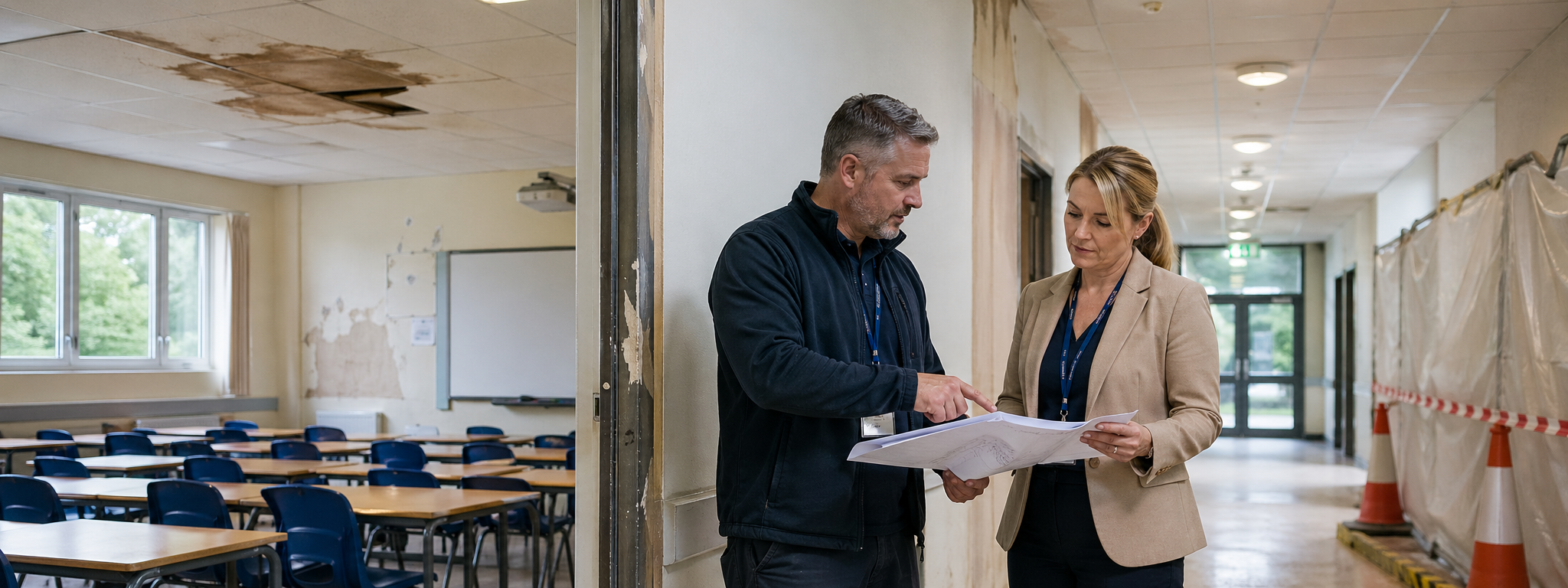
It is no longer just about whether a building looks tired. Across the country, schools are dealing with leaking roofs, damp classrooms, faulty toilets, poor heating, ageing fire doors, asbestos concerns and outdoor spaces that are difficult to use safely. A recent NAHT survey found that around half of school leaders had buildings or areas that were either out of use or not fit for purpose, while 96% said they did not receive enough capital funding to maintain their school estate properly. (naht.org.uk)
That leaves many heads, business managers and estates teams asking the same uncomfortable question: when everything feels urgent, what should come first?
Start with safety, not appearance
In an ideal world, schools would be able to plan estates work properly: refurbish in phases, modernise classrooms, improve outdoor areas and create better spaces for pupils and staff.
In reality, many schools are having to make difficult choices. A fresh coat of paint may improve morale, but if a fire door does not close properly, a toilet block is unusable or a roof leak is affecting electrics, those issues have to sit higher on the list.
The most sensible starting point is a simple risk-based approach. Which problems could cause harm? Which issues could force part of the school to close? Which defects are likely to become more expensive if ignored for another year?
That usually puts the following areas at the top of the priority list:
- Fire safety and emergency access
- Roof leaks and water ingress
- Heating, ventilation and electrical safety
- Toilets and hygiene facilities
- Asbestos management
- Accessibility and SEND spaces
- Boundary fencing, gates and site security
This is not glamorous work, but it is the work that keeps schools open.
Toilets are not a minor issue
Toilets are often treated as a low-status estates issue, but they have a direct impact on dignity, safeguarding, attendance and pupil wellbeing.
The NAHT survey reported that toilet facilities were one of the most common problem areas, with many schools saying blocks were closed or not fit for purpose. For pupils, this can mean avoiding the toilet during the school day, limiting what they drink, arriving late to lessons, or feeling unsafe in unmonitored areas.
For schools, poor toilet provision can quickly become a behaviour, safeguarding and health concern. It is also one of the areas parents notice most.
When budgets are tight, a full refurbishment may not be possible. But phased work can still make a difference: replacing broken cubicles, improving ventilation, fitting safer locks, upgrading lighting, improving handwashing facilities and making sure accessible toilets are genuinely accessible.
SEND spaces need to be part of estates planning
School buildings are not just about bricks and mortar. They shape how pupils learn, move, regulate and feel.
For pupils with special educational needs and disabilities, a poorly designed or poorly maintained environment can make the school day much harder than it needs to be. In the recent NAHT findings, 41% of leaders with estate issues said spaces for children with SEND were not fit for use.
That matters. A calm room with poor lighting, damaged flooring or bad acoustics is not a calm room. A sensory space that doubles as a storage cupboard is not really a sensory space. A classroom with poor ventilation, harsh lighting and limited space to move can create unnecessary barriers for pupils and staff.
When reviewing estates priorities, schools should look carefully at:
- Small group rooms
- Sensory and regulation spaces
- Accessible toilets and changing areas
- Ramps, lifts and routes around the site
- Acoustic treatment
- Furniture for different physical and sensory needs
- Outdoor spaces for movement and decompression
These improvements may not always be the most expensive projects, but they can have a significant effect on inclusion.
Evidence matters when applying for funding
One of the biggest frustrations for schools is knowing there is a problem, but struggling to secure the funding to fix it.
Good evidence can make a difference. Schools should keep clear records of defects, repairs, closures, complaints, risk assessments and temporary fixes. Photographs, contractor reports and dated logs are useful, especially when a problem is getting worse over time.
A school that can show repeated roof leaks, affected classrooms, emergency repairs and impact on learning is in a stronger position than one simply saying “the roof needs replacing”.
Useful evidence includes:
- Condition surveys
- Fire risk assessments
- Accessibility audits
- Health and safety reports
- Contractor quotes
- Photographs of defects
- Logs of room closures or disruption
- Records of temporary repairs
- Complaints or concerns from staff, pupils or parents
This evidence also helps schools decide what to tackle first, rather than relying on who shouts loudest.
The hidden cost of delaying repairs
When schools are under pressure, it can be tempting to patch and postpone. Sometimes that is the only realistic option. But delays often come with hidden costs.
A small leak can damage ceilings, flooring, electrics and teaching resources. Poor ventilation can contribute to condensation and mould. Broken doors and windows can increase heat loss, pushing up energy bills. A tired toilet block can become a behaviour hotspot. A cracked playground surface can become a trip hazard.
In other words, estates problems rarely stay still. They either get fixed, or they spread.
This is why planned maintenance matters, even when budgets are stretched. Schools may not be able to do everything at once, but having a clear plan means they can avoid making every decision in crisis mode.
Working with suppliers: what schools should ask
Choosing the right supplier is not just about finding the cheapest quote. Schools need contractors who understand live education environments.
Before appointing a supplier, schools should ask:
- Have you worked in occupied school sites before?
- Can work be phased around term dates, exams and safeguarding needs?
- What checks do your staff complete before coming on site?
- Can you provide clear risk assessments and method statements?
- What warranties or aftercare are included?
- How will disruption, noise and dust be managed?
- Can you help us prioritise if we cannot afford the full project at once?
The best suppliers will not simply sell a solution. They will help the school understand the safest and most cost-effective route forward.
A practical way forward
The scale of the school estate challenge can feel overwhelming. Many schools are dealing with buildings that were not designed for current pupil numbers, current safeguarding expectations or modern SEND provision. Funding is tight, needs are rising and leaders are being asked to do more with less.
But schools do not have to solve everything in one go.
A sensible first step is to create a ranked estates list based on safety, disruption, legal duty, pupil impact and long-term cost. From there, schools can gather evidence, seek quotes, apply for funding where available and work with suppliers who understand the pressures of education settings.
The condition of school buildings is not a side issue. It affects learning, behaviour, attendance, inclusion, staff morale and safety.
When the budget will not stretch to everything, the priority has to be clear: keep pupils safe, keep the school open, and invest first in the spaces that matter most to daily school life.
Looking for trusted suppliers to support your school estate, SEND provision, EdTech strategy or attendance initiatives? Explore education suppliers on School Supply Store and connect with providers who understand the needs of UK schools.

