
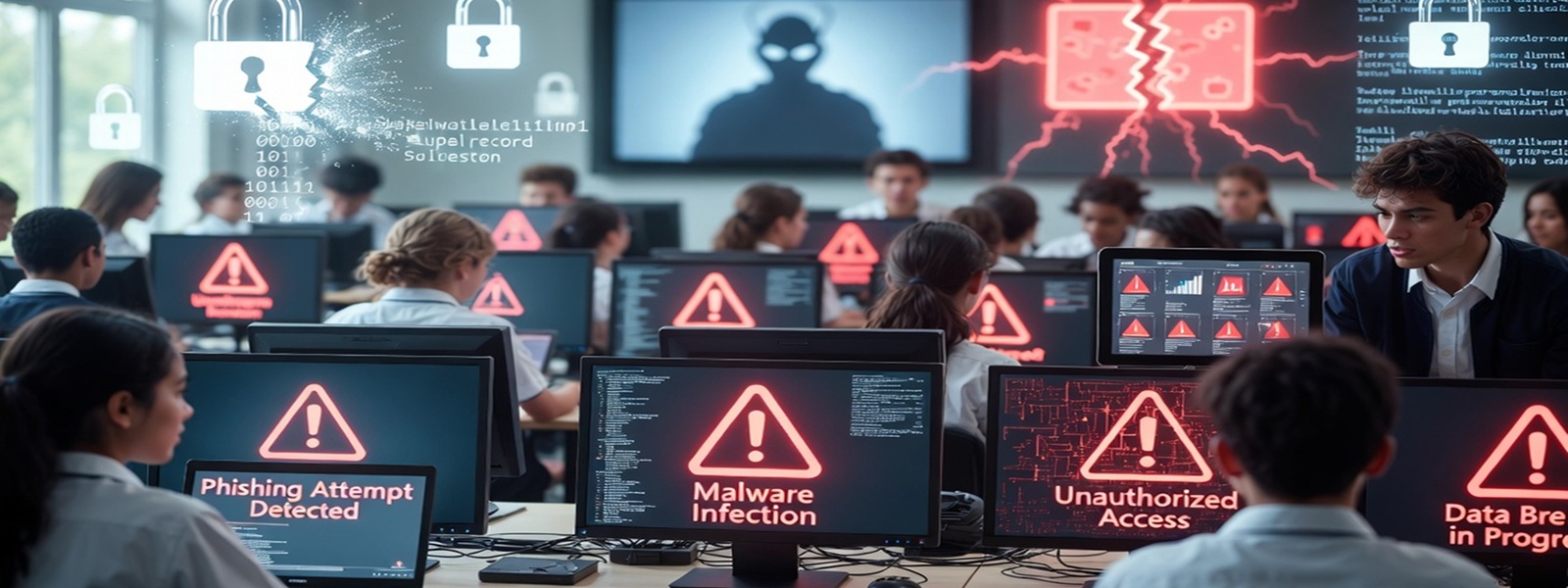
A teacher walks into class, tries to get started, and something simple will not cooperate. A laptop refuses to sign in. The internet drops out halfway through a lesson. Printing does not work when worksheets are needed immediately, not ten minutes later. A platform works perfectly well in one room and then seems to have a mind of its own somewhere else. None of it sounds dramatic when written down, but in a school those interruptions matter because they happen in real time, in front of staff and pupils, usually at the worst possible moment.
That is the part people outside education do not always see. It is not normally one major outage that causes the biggest headache. More often, it is the steady drip of smaller problems. Little hold-ups. Repeated inconsistencies. Things that should work, but do not always. A couple of minutes lost here, five minutes there, a class waiting while someone tries to sort out a login or reconnect a screen. It does not take much before the lesson has lost its shape.
And once that happens, it is not just an IT issue anymore. It becomes a teaching issue.
Schools have enough to think about without battling their own systems. Staff are already under pressure. Leaders have safeguarding, inspections, budgets, cyber security, estate issues, staffing, parental expectations and a dozen other things on their minds. They do not need basic technology getting in the way of the school day as well. But that is exactly what happens when systems are unreliable or support is too reactive.
A lot of schools have become used to working around technology rather than being properly supported by it. That is probably more common than many people would admit. If a device is slow, staff find another one. If printing becomes temperamental, they learn which machine is least likely to fail. If access permissions are messy, somebody keeps a note of who to contact. Schools are good at coping. They have to be. The trouble is that coping is not the same as having a stable, well-run IT environment.
That is where firms like Cirrus Technology Systems are trying to make a difference.
What schools usually want from an IT partner is not especially glamorous. They want things to work properly, and they want problems sorted quickly when they do arise. They want some confidence that somebody is keeping an eye on the bigger picture rather than just waiting for the next support ticket to land. Above all, they want continuity. A school cannot afford to treat IT as a collection of unrelated fixes.
Cirrus Technology Systems works with schools on the basis that school IT has to be managed around the rhythm of term time, not around a generic support model. That is an important distinction. Schools are busy, time-sensitive environments. If something goes wrong at 9.05am, it affects learning straight away. If an issue drags on for half a day, the disruption spreads. Good support in that setting is not just about technical knowledge. It is about understanding how schools operate minute by minute.
A big part of that comes down to getting the basics right and keeping them right. Core platforms such as Microsoft 365 and Google Workspace need to be set up properly and managed consistently. User access needs to make sense. New starters should be able to get going without delay. Leavers should be removed cleanly. Permissions should not become tangled over time. These are not headline-grabbing tasks, but when they are neglected they create endless background friction.
The same goes for devices. In some schools, IT still ends up being handled one machine at a time, which is rarely the best way of doing it. A more joined-up approach means devices are managed as a fleet, so staff and pupils get a more consistent experience wherever they are in the school. That consistency counts for a lot. Teachers should not have to wonder whether the setup in one classroom is going to behave differently from the one next door.
There is also plenty of work that good support should be doing quietly in the background. Monitoring systems, dealing with maintenance sensibly, planning updates at the right time, spotting issues before they turn into bigger ones. In truth, some of the best IT support is the least visible. If nobody is talking about it, that is often a sign it is doing what it should.
Security and safeguarding obviously sit at the centre of all this as well. Schools need secure access, clear controls and sensible reporting, not only so systems are protected, but so leaders can show that the right processes are in place when questions are asked. That matters to senior leadership teams, governors and inspectors alike.
None of this is about making school IT sound more complicated than it is. In many ways, it is the opposite. Schools need dependable systems, clear accountability and support that understands the pressure points of the academic year. When that is in place, staff can focus on teaching instead of troubleshooting.
And really, that is the point. In a school, reliable IT is not a bonus. It is part of keeping the day on track.

