SEND Schools Under Pressure: Why 2027 Could Be a Turning Point for Specialist Education in England
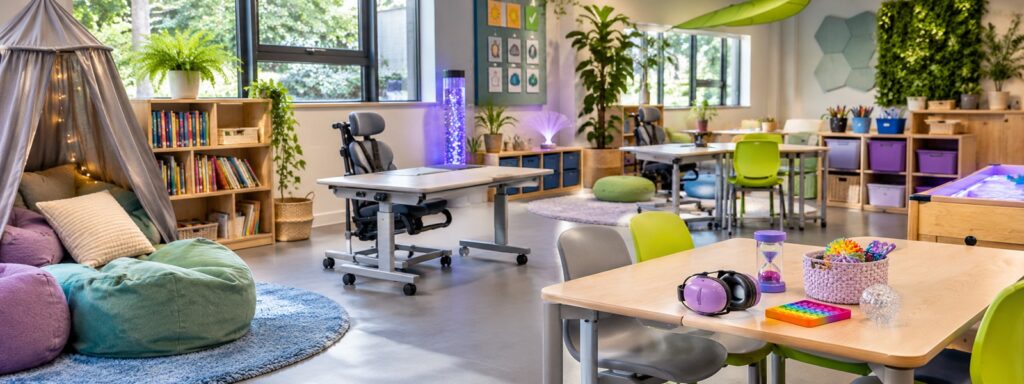
With demand for specialist school places continuing to grow, new government investment is creating opportunities to improve learning environments, accessibility and support for children with special educational needs and disabilities.
England’s specialist education sector is entering a period of significant change as schools, academy trusts and local authorities respond to rising demand for special educational needs and disabilities (SEND) provision.
With more children requiring additional support, increasing pressure on specialist school places and renewed government commitments to improving inclusion, 2027 could prove a defining year for the way SEND education is delivered.
But while additional funding and ambitious reforms offer opportunities, the challenge for schools goes beyond simply creating more places.
It is about ensuring that every child has access to a learning environment, specialist resources and professional support that meets their individual needs.
Growing demand is putting specialist provision under pressure
The scale of demand facing England’s SEND system is substantial.
According to Department for Education statistics published in 2026, approximately 211,400 children and young people with Education, Health and Care (EHC) plans were attending special schools in January 2026, representing an increase of 8.5% compared with the previous year.
Across England’s schools, more than 1.8 million pupils have been identified as having special educational needs.
These figures highlight the increasingly important role played by specialist schools and the wider education system in supporting children with additional learning, communication, physical and emotional needs.
For many local authorities, meeting demand has become increasingly difficult.
In some areas, pressure on available places has required children to travel considerable distances to access suitable provision, while schools face the challenge of adapting existing facilities to accommodate changing pupil requirements.
The issue is not simply one of capacity. It is also about ensuring that provision is appropriate, accessible and capable of delivering positive educational outcomes.
Government investment offers opportunities for expansion
The government has announced a series of measures designed to strengthen SEND provision and improve access to specialist support.
These include a commitment to invest at least £3 billion between 2026/27 and 2029/30 to create new special school places and develop inclusion bases within mainstream education.
For the 2026/27 financial year, £860 million in capital funding was announced to support the creation of approximately 11,000 places for children and young people with SEND or requiring alternative provision.
More recently, on 19 November 2026, the Department for Education confirmed that total high needs funding would reach £12.4 billion in 2027/28, with additional funding supporting growing demand across special schools, alternative provision and specialist post-16 settings.
While funding allocations will be subject to local priorities and implementation arrangements, these commitments point towards continued investment in education infrastructure and specialist provision.
For school leaders and those responsible for planning and procurement, the coming years could present opportunities to modernise existing facilities alongside the development of new provision.
Creating learning environments that meet individual needs
One of the most important considerations for SEND schools is the physical learning environment.
Unlike conventional classroom design, specialist education settings often need to accommodate a wide range of sensory, communication, mobility and behavioural requirements.
For some pupils, lighting, acoustics and classroom layout can significantly influence their ability to concentrate, communicate and participate in learning.
For others, accessible furniture, specialist equipment or dedicated quiet spaces may be essential.
This places increasing importance on thoughtful school design.
Sensory rooms, adaptable classrooms, accessible outdoor spaces and specialist teaching facilities can all contribute to creating environments that support different learning needs.
However, there is no universal solution.
Successful investment depends on understanding the needs of pupils, consulting teaching and therapy professionals and selecting resources that can be integrated effectively into everyday educational practice.
Assistive technology is becoming increasingly important
Technology is also playing a growing role in specialist education.
Augmentative and alternative communication (AAC) devices, interactive learning systems, accessible software and specialist digital resources can help pupils communicate, participate and develop greater independence.
For children with complex communication needs, appropriate technology can provide opportunities to express preferences, engage with teachers and take a more active role in classroom activities.
Digital tools may also help schools adapt learning materials to different abilities and provide more personalised educational experiences.
However, the value of assistive technology depends on much more than purchasing equipment.
Schools must consider staff training, technical support, compatibility with existing systems and the ongoing needs of individual pupils.
Technology should support the professional judgement of teachers and specialists rather than replace the individualised approaches that underpin effective SEND provision.
The importance of specialist staff and professional support
Investment in buildings and equipment is only one part of the wider challenge.
SEND schools depend on skilled teachers, teaching assistants, therapists and specialist support professionals who understand the complex requirements of the children they support.
Recruitment, retention and professional development are therefore critical considerations.
The government’s wider SEND reform proposals include measures to strengthen access to specialist expertise and improve training opportunities for education professionals.
For school leaders, ensuring that staff can make effective use of specialist learning resources will be just as important as securing the resources themselves.
A well-equipped classroom will only achieve its full potential when the people working within it have the knowledge, confidence and support to use those facilities effectively.
What 2027 could mean for school investment and procurement
The combination of rising demand, additional funding and evolving education policy is likely to influence purchasing and investment decisions across the SEND sector.
Schools and trusts considering new provision or improvements to existing facilities may need to prioritise accessibility, flexibility and long-term value.
This could include investment in specialist classroom furniture, sensory resources, communication technology, outdoor learning environments, accessibility improvements and adapted teaching spaces.
However, procurement decisions will need to balance immediate requirements against future pupil needs, ongoing maintenance costs and available funding.
For suppliers working with the education sector, understanding these challenges will be increasingly important.
Schools are not simply purchasing products. They are looking for practical solutions that improve accessibility, support teaching professionals and contribute to better experiences for children and young people.
A defining period for SEND education
The pressures facing England’s SEND system are unlikely to disappear overnight.
Increasing demand, financial constraints and the complexity of delivering suitable provision will continue to challenge schools and local authorities throughout 2027.
Nevertheless, planned investment and reform offer an opportunity to reconsider how specialist education is designed, resourced and delivered.
For SEND schools, the priority must remain ensuring that additional capacity is matched by appropriate facilities, skilled professionals and genuinely accessible learning opportunities.
The real measure of progress will not simply be how many new SEND places are created, but whether those places provide the environments, resources and support that children need to thrive.
As England’s education sector looks towards 2027, that principle should remain at the centre of every decision about specialist provision.