Fresh Air, Fresh Thinking: School Outdoor Design Is Changing
Why Schools Are Rethinking Outdoor Space Design for Year-Round Learning and Wellbeing
Outdoor areas are increasingly being viewed as flexible learning, wellbeing and campus spaces — not just places for breaktimes or occasional summer activities.
As schools face pressure on internal space, outdoor shelters, canopies, covered walkways and weather-protected learning areas are becoming a more important part of estate planning.
For many schools across the UK, outdoor space is no longer viewed simply as somewhere for breaktimes, lunchtime queues or occasional summer activities. Increasingly, schools are reassessing how external environments can contribute more directly to learning, wellbeing, social interaction and overall campus functionality throughout the year.
As pupil numbers continue to rise and schools face growing pressure on internal space, outdoor learning environments are becoming an increasingly important part of estate planning discussions across primary, secondary and further education settings.
At the same time, schools are under greater pressure to support student wellbeing, improve engagement with outdoor activity and create more flexible spaces that can adapt to changing operational demands.
The goal is no longer simply to protect pupils from the weather — it is to make better use of every part of the campus throughout the year.
Creating Year-Round Outdoor Environments
According to ShadeZone, schools are increasingly investing in outdoor canopy systems, retractable awnings, parasols and covered learning areas to create practical, year-round environments for education and recreation.
The company works with schools, academies and colleges across the UK to deliver tailored shelter solutions designed for educational settings.
The shift reflects broader changes in how schools are thinking about the use of space. Traditionally, outdoor areas were often underutilised for large parts of the year due to weather limitations. In many schools, rain, wind and lack of shelter significantly restricted how effectively playgrounds, courtyards and open areas could be used.
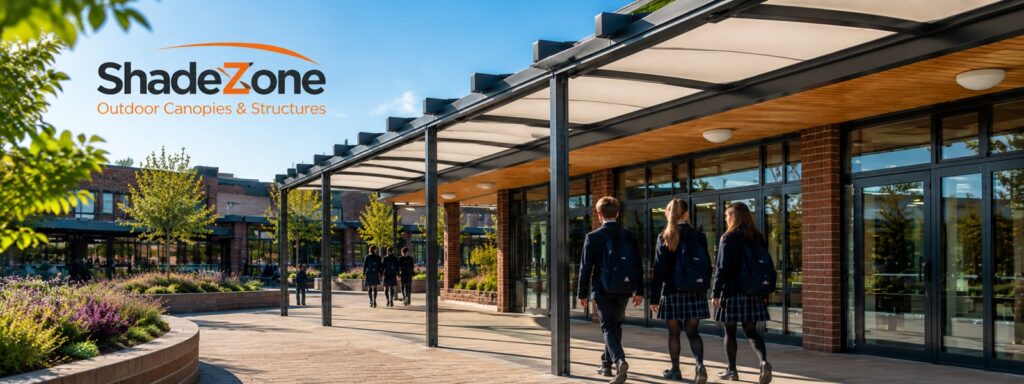
Modern canopy and shelter systems are increasingly being used to address those limitations by creating weather-protected outdoor spaces that remain usable across all seasons. This includes covered dining areas, outdoor classrooms, social spaces, sports shelters and protected walkways between buildings.
A Cost-Effective Alternative to Major Extensions
The concept has become particularly important as schools seek cost-effective alternatives to major building extensions. Outdoor structures can often provide additional usable space without the financial and logistical complexity associated with permanent construction projects.
Research and sector guidance increasingly point to the wider benefits of outdoor learning and activity. Outdoor environments are frequently associated with improvements in pupil wellbeing, engagement and physical activity levels, particularly among younger children.
Covered outdoor areas can also support more flexible teaching approaches and provide schools with additional capacity during busy periods.
Outdoor classrooms
Covered learning areas can support practical teaching, group work and curriculum enrichment throughout the year.
Dining and social space
Schools can extend usable space during lunch periods while reducing congestion inside buildings.
Covered walkways
Weather-protected routes help larger campuses manage movement between buildings more effectively.
Play and wellbeing
Outdoor shelters can help pupils stay active, social and engaged even during less favourable weather.
Designing for Different Education Settings
Importantly, the conversation is no longer only about playground shelter. Schools are now looking more strategically at how outdoor infrastructure can support the wider functioning of the school environment.
Secondary schools and colleges, for example, are increasingly using covered outdoor areas to extend dining provision, reduce congestion and create social breakout spaces for students. Covered walkways are also becoming more common on larger campuses where students regularly move between buildings during the school day.
Primary schools and early years settings often focus more heavily on outdoor play and learning integration. Covered external areas can allow outdoor activities to continue during poor weather while also providing shade and UV protection during warmer periods.
A covered area may serve as an outdoor classroom, a social dining area and a sheltered waiting space at different points in the same day.
Flexible Spaces for Changing Demands
ShadeZone’s school-focused systems include retractable canopies, polycarbonate roof structures, freestanding shelters and large parasols designed specifically for educational environments.
The company highlights the growing importance of adaptable outdoor spaces that can support both learning and recreational use while remaining durable enough for long-term school use.
One of the major drivers behind this trend is flexibility. Schools increasingly require spaces that can perform multiple functions across the day. A covered area may serve as an outdoor classroom during lessons, a social dining area at lunchtime and a sheltered waiting or collection area during pick-up periods.
This operational flexibility has become more important as schools face growing demands on estate efficiency and pupil capacity management.
Wellbeing, Design and Environmental Quality
There is also increasing attention being paid to student wellbeing and environmental quality. Outdoor spaces are being viewed not simply as overflow areas, but as part of the wider educational environment that can positively influence concentration, behaviour and social interaction.
The design of these spaces is therefore becoming more sophisticated. Schools are increasingly considering aesthetics, natural light, ventilation and integration with existing buildings rather than viewing canopies and shelters as purely functional additions.
Technology and materials have also evolved significantly in recent years. Modern systems now offer stronger weather resistance, improved durability and lower maintenance requirements compared to older outdoor structures.
Retractable systems, UV-resistant materials and bespoke architectural designs are becoming increasingly common within the sector.
Planning for Long-Term Value
However, specialists across the education infrastructure sector often stress that successful outdoor projects depend heavily on long-term planning rather than short-term purchasing decisions.
Schools are being encouraged to think carefully about pupil movement, safeguarding, accessibility, maintenance and year-round usability when designing outdoor spaces.
Budget pressures also remain a significant factor. Many schools continue to operate within constrained capital budgets, making durability, lifecycle cost and operational value important considerations when assessing outdoor infrastructure investments.
The Bigger Picture
As schools continue to rethink how space is used across the educational environment, outdoor learning and sheltered external areas are likely to become an increasingly important part of long-term campus planning.
For many education providers, the goal is no longer simply to protect pupils from the weather. Increasingly, it is about creating more flexible, inclusive and effective learning environments that allow schools to make better use of every part of the campus throughout the year.
Explore outdoor shelter solutions for schools
ShadeZone designs and installs awnings, canopies, parasols and covered outdoor solutions for schools, colleges and education settings across the UK.